
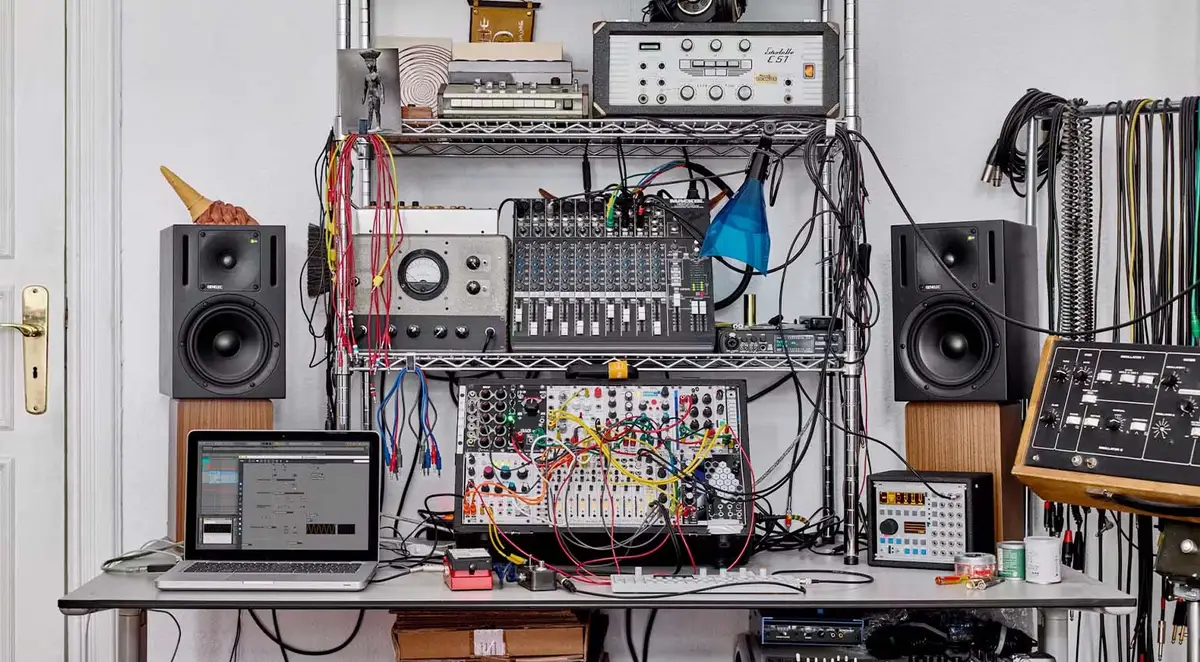
Max for Live is a visual programming environment from Cycling ’74 that integrates with Ableton Live to allow users to create custom instruments and effects.
Features
Visual editor
The interface uses a modular approach where users patch connections between blocks using virtual cables, similar to other modular synthesizer environments.
DAW integration
Devices can interact with the entire digital audio workstation, not just individual tracks, allowing for control over hardware and live performance elements.
Community devices
A large ecosystem of developers provides both free and paid instruments and effects, ranging from experimental tools to practical utilities.
Max for Live, often abbreviated as M4L, is a visual programming language developed by Cycling ’74 that has been part of Ableton Live since 2010. It functions as a multimedia programming environment specifically designed for use within a digital audio workstation. The system allows users to build custom instruments and audio or MIDI effects using a graphical interface rather than traditional text-based coding. This approach makes the development process accessible to those without extensive programming experience, particularly for users familiar with modular systems.
A key distinction between Max for Live devices and standard plugins is their ability to interact with the broader DAW environment. While typical plugins operate on specific track audio or MIDI data, M4L devices can reach into the entire application. This capability enables functions such as controlling external hardware, triggering video during live sets, and creating custom MIDI sequencers. The article notes that some devices, like the LFO, have become so useful that they are now standard features in Ableton Live, having originated as M4L creations.
The platform supports a wide range of use cases, from experimental sound design to practical studio utilities. Developers create devices that can drive physical MIDI gear, interact with outboard effects, and support live performance workflows. Users can modify existing devices or combine elements from different tools to create new multi-effects. The visual nature of the language lowers the barrier to entry, allowing users to learn basic patching in a short time while exploring more complex logic and digital signal processing as they advance.
Max for Live is included with the Ableton Live Suite edition and is available as a separate add-on for the Standard version. A significant portion of the available devices are free, provided by a community of developers. While some tools carry a price tag, the article highlights the availability of numerous free instruments and effects that expand the capabilities of the DAW without additional cost.
Videos
Key facts
- Cycling ’74
- Ableton Live
- Live Suite
- Live Standard
- Visual programming language